
Risk Disclosure: This article is for cryptocurrency research and educational purposes only and does not constitute investment advice. PIPEDOG falls into the category of emerging, low-market-cap tokens, where price volatility, liquidity, project transparency, and shifts in community sentiment can significantly affect outcomes. Investors should independently verify official project information, contract addresses, circulating supply data, and trading risks.
1. What Is PIPEDOG? Why Is This Token Gaining Market Attention?
When most users first search "what is PIPEDOG" or "what is PIPEDOG coin," they’re not looking for a one‑line definition. They want to know: What type of crypto asset is it? Is it a memecoin, or does it have real utility? What’s the upside thesis? Can a beginner buy it?
Based on currently available market data, PIPEDOG is a digital asset traded on crypto exchanges. Traders can view PIPEDOG/USDT pair information—including price, trading interface, and market data—on HIBT. The HIBT market page includes a dedicated PIPEDOG/USDT entry, which you can access via the PIPEDOG real‑time price and market page.
That said, for a newer token like PIPEDOG, we cannot simply frame this as a "hidden gem," "about to moon," or "must‑buy." New tokens typically lack long‑term historical data, so investors should first build a research methodology rather than jump straight into price predictions.
1.1 What Is the Basic Definition of PIPEDOG?
Think of PIPEDOG as an emerging trading token in the crypto space. Whether it qualifies as a memecoin, community token, or another type of asset depends on official disclosures, community operations, tokenomics, and on‑chain/off‑chain trading activity—all of which investors need to verify.
For any new token, step one is not "will it go up?" but rather confirming these fundamentals:
- Does the project have a clear website and official social channels?
- Is the token contract address public and verifiable?
- Are total supply, circulating supply, burn mechanisms, and unlock schedules disclosed?
- Is there adequate liquidity (pools or exchange order‑book depth)?
- Are team, community, and operational information transparent?
- Are there signs of concentrated holdings or suspiciously linked wallets?
If any of these are unclear, PIPEDOG should be treated as a high‑risk new token, not a mature asset.
1.2 What Type of Crypto Project Is PIPEDOG?
Crypto assets generally fall into a few broad categories.
First, infrastructure tokens – e.g., Ethereum. ETH derives value from network usage, developer ecosystem, smart contracts, DeFi, Layer‑2s, and on‑chain applications. You can explore infrastructure‑type asset analysis via the ETH price prediction page, which includes modeling, short‑term and long‑term forecasts—all with clear disclaimers that predictions are for reference only and not investment advice.
Second, application‑layer tokens – DeFi, AI, gaming, RWA, or infrastructure‑adjacent projects. These require tracking product usage, protocol revenue, user growth, TVL, developer activity, and commercial traction.
Third, meme / community tokens – Their value doesn't necessarily come from technical complexity but from culture, virality, social media buzz, holder distribution, and market sentiment.
PIPEDOG is best approached through a meme/community token lens. That means you shouldn't just ask whether it has a whitepaper—you should investigate: Is the community real? Is the buzz sustainable? Is there genuine trading depth? Is the holder base distributed? Is the hype organic or manufactured?
1.3 Why Do Meme Tokens Attract Attention?
Meme tokens have carved out a lasting niche in crypto because they blend internet culture, community consensus, low‑barrier entry, and speculative liquidity.
Traditional stocks are valued on revenue, profits, cash flow, and business models. Most meme tokens have none of that, so their market value hinges on sentiment, narratives, collective action, and trading liquidity.
That's both the opportunity and the danger.
Research on memecoin liquidity risk (e.g., preprints on arXiv) shows that meme tokens are a class with high community engagement, extreme volatility, and greater vulnerability to market manipulation. Analysts recommend evaluating them through token distribution, trading activity, and liquidity metrics. Another study on memecoin risk notes that the ecosystem is prone to extreme swings, low project commitment, and widespread fraud—with many projects relying on off‑chain signals like websites, logos, and social media to build credibility.
So, researching PIPEDOG isn't about "funny name + cheap price + group shilling." It requires a disciplined approach to community, liquidity, holder structure, and risk.
2. What Is PIPEDOG’s Core Value? What Should Investors Focus On?
A frequent question: "PIPEDOG doesn't have traditional company revenue—so where does its value come from?"
That's a crucial question because it dictates your analytical framework.
2.1 Where Does Meme Token Value Come From?
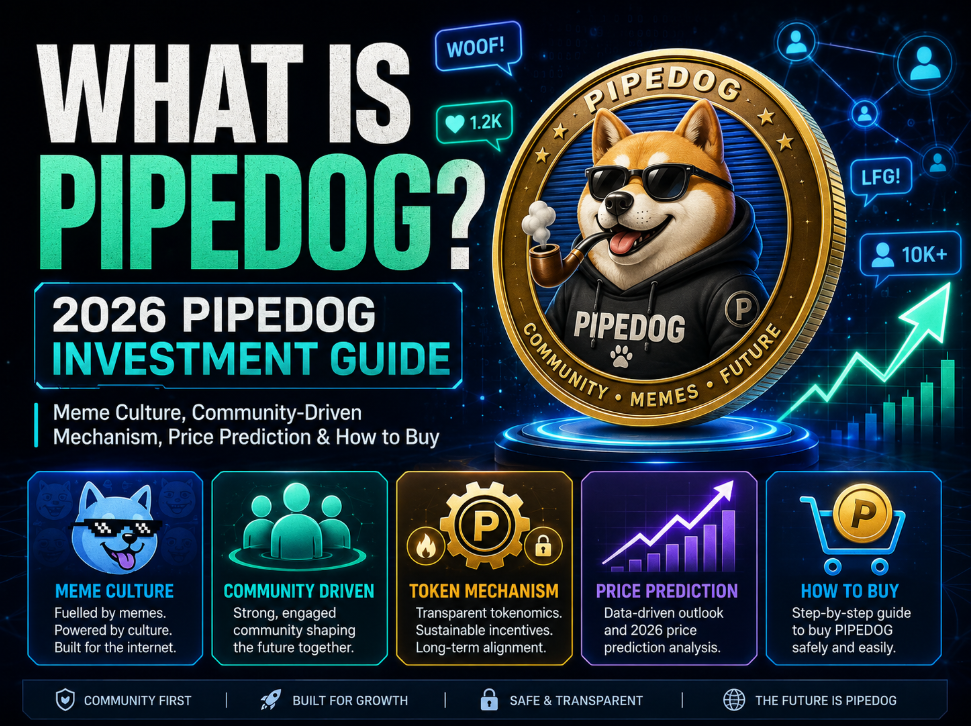
Meme tokens typically lack stable revenue, profits, cash flow, or financial statements. Instead, their value is driven by four factors:
1. Community size.
A token with sustained growth in real users, active discussions, content creation, and community engagement is more likely to spread organically.
2. Brand virality.
The core asset of a meme token is often its cultural meme. An easily shareable, remixable, identity‑forming image or name can attract retail attention far more effectively than complex technical narratives.
3. Liquidity.
A meme token without liquidity is a trap—even if the price spikes, you may not be able to exit. What matters: Can you buy and sell? Is the bid‑ask spread reasonable? Do large trades move the price excessively?
4. Market mindshare.
Meme tokens are highly sentiment‑driven. In bull markets, altcoin rotations, and risk‑on phases, they attract speculative flows. When risk appetite fades, they're often the first to be dumped.
Charles Schwab's memecoin risk commentary also highlights that these coins are typically propelled by social media hype, community sentiment, and viral narratives—not fundamentals—and that prices can surge just as quickly as they crash, with many new meme tokens suffering from thin liquidity.
2.2 How Does PIPEDOG’s Community‑Driven Model Affect Price?
If PIPEDOG is community‑driven, its price is likely tightly coupled with community momentum.
Watch three layers:
User growth – Track Telegram, Discord, X (Twitter), website visits, search trends, and member counts. But growth can be botted—look for genuine interaction, not just inflated numbers.
Community participation – A healthy meme community isn't just project announcements; it's users creating memes, sharing content, initiating discussions, organizing events, and collaborating organically.
Holder distribution – If a few whales control most of the supply, price is easily manipulated. Even if address count grows, extreme concentration still signals risk.
When researching meme tokens, community isn't the only metric, but it's one of the most critical.
2.3 How Does PIPEDOG Differ from Traditional Crypto Projects?
PIPEDOG and ETH are apples and oranges.
ETH is a Layer‑1 infrastructure asset. Its value comes from network usage, gas demand, developer activity, Layer‑2s, DeFi, RWA, and institutional adoption.
PIPEDOG is far more community‑driven. Its core drivers are more likely market hype, viral spread, trading liquidity, and speculative cycles.
That means you cannot apply an ETH‑style framework to PIPEDOG.
- For ETH: look at network revenue, dev ecosystem, L2 activity, DeFi TVL, institutional flows.
- For PIPEDOG: look at community growth, virality, trading volume, liquidity depth, holder concentration, and sustainability of attention.
If you treat PIPEDOG like an infrastructure asset, you'll misjudge the risks.
3. PIPEDOG Tokenomics: How Supply, Circulation, and Market Structure Affect Investment
For small‑cap tokens, tokenomics often matter more than the story.
A project can have a buzzing community, but if supply is opaque, holdings are overly concentrated, liquidity is shallow, or unlock pressure looms, the price can be extremely fragile.
3.1 What Is PIPEDOG’s Token Supply Mechanism?
Investors need to nail down these basics:
- What is total supply?
- What is current circulating supply?
- Is there an inflation mechanism?
- Is there a burn mechanism?
- How are allocations split among team, community, marketing, liquidity, and ecosystem incentives?
- Are there lock‑up periods?
- When are large unlocks scheduled?
These determine potential sell pressure. If total supply is massive but circulating supply is tiny, future unlocks could suppress price. If team and early wallets hold outsized portions, watch for concentrated dumping.
For a new token like PIPEDOG, if public data is scarce, err on the side of caution—don't assume the mechanics are healthy.
3.2 Why Does Token Distribution Matter?
Distribution determines whether the market structure is sound.
If the team, early investors, or a handful of wallets control a large share, the price can be swayed by a few actors. When they sell, retail holders often become exit liquidity.
If distribution is more decentralized, community participation tends to be healthier—but even then, many addresses could belong to the same entity.
Research on memecoin market manipulation (e.g., arXiv) indicates that some high‑return meme tokens employ artificial growth tactics, such as wash trading and pool‑based price inflation, creating fake interest to enable profitable exits.
So, when studying PIPEDOG, don't just watch the price—track who holds, who trades, whether volume is real, and whether liquidity is stable.
3.3 Why Does Liquidity Determine Risk for Small Tokens?
Thin liquidity is one of the biggest risks for small tokens.
It creates three problems:
1. Easy to buy, hard to sell.
In a hype phase, buyers rush in. But when you want to exit, if order‑book depth is shallow, you may not get a fair price.
2. Price is easily pumped.
A thin pool or order book means a relatively small buy can send the price soaring—creating a false "breakout" impression.
3. High slippage on larger trades.
Selling a modest position can quickly crash the price, and your actual fill price may be far worse than the displayed price.
That's why PIPEDOG investors should closely monitor volume, LP size, bid‑ask spread, order‑book depth, and exchange support.
4. How Does PIPEDOG Compare to Other Crypto Assets?
One of the most important skills for crypto newcomers is asset classification. Different assets require different analytical lenses.
4.1 PIPEDOG vs. ETH
ETH is a foundational blockchain asset underpinning the Ethereum ecosystem—smart contracts, DeFi, NFTs, Layer‑2s, RWA, and a vast developer network. Its price is influenced by network usage, market cycles, institutional demand, and ecosystem growth.
PIPEDOG is more of a community‑driven token. Its key variables are likely social virality, meme culture, trading fervor, market sentiment, and liquidity.
So, ETH fits an "infrastructure value" framework; PIPEDOG fits a "community consensus + liquidity risk + meme cycle" framework.
You can compare the analytical differences by visiting the ETH price prediction page alongside PIPEDOG's data.
4.2 PIPEDOG vs. Privacy and Infrastructure Projects
The contrast becomes even clearer when you compare PIPEDOG to privacy payments, privacy computation, or video infrastructure projects.
For example, What Is XVG? In‑Depth Look at Verge Crypto focuses on privacy payments—digital payments, network‑level privacy, and low‑cost transfers. PIPEDOG is about community culture and meme propagation.
Similarly, What Is COTI? 2026 COTI Investment Guide covers privacy‑computing Layer‑2 and financial infrastructure—Confidential Computing, Garbled Circuits, enterprise data privacy. PIPEDOG is far more about sentiment and community.
And What Is THETA? Theta Network Future Value Analysis discusses decentralized video, AI compute, and DePIN infrastructure—with real utility in video delivery, edge networks, and GPU resources. PIPEDOG relies primarily on community consensus and meme spread.
These comparisons help newcomers understand that not all crypto is the same. PIPEDOG should not be force‑fit into the narrative of public chains, AI compute, or privacy infrastructure—it belongs squarely in the meme/community token bucket and should be researched accordingly.
5. Why Does PIPEDOG’s Price Rise or Fall?
When users search "PIPEDOG price prediction," they really want to know: will it go up? But in meme‑token markets, price moves are rarely driven by a single factor. They're shaped by community heat, market cycles, liquidity, and risk appetite—all interacting.
5.1 Factor 1: Community Heat
If PIPEDOG is community‑driven, community momentum directly affects short‑term price.
Watch for:
- Is X (Twitter) discussion volume increasing?
- Are Telegram/Discord channels genuinely active?
- Is there organic meme creation?
- Are KOLs talking about it (and are they paid shills)?
- Are search trends rising?
- Does community activity persist even when price is flat, or only during pumps?
If heat comes from real user engagement, it may sustain longer. If it's mostly short‑term marketing and pump‑group noise, the price may fade quickly.
5.2 Factor 2: Market Cycles
Meme tokens are extremely sensitive to the broader market cycle.
In bull markets, risk appetite is high, and speculative capital flows from BTC to ETH to altcoins to meme assets—PIPEDOG could catch a bid.
In bear or choppy markets, capital rotates back to BTC, ETH, stablecoins, and high‑liquidity assets, and meme tokens tend to underperform.
So, judging PIPEDOG's trajectory requires not just project‑specific analysis but also an assessment of whether the overall crypto market is in a risk‑on phase.
5.3 Factor 3: Trading Liquidity
Liquidity is the anchor of price stability for small tokens.
If PIPEDOG's volume is growing, the bid‑ask spread is tight, and market depth is improving, the trading environment is relatively healthy.
But if price rises on very low volume, or if a few trades move the price dramatically, beware of manipulation or shallow liquidity.
The biggest problem with low‑liquidity tokens isn't that they can't go up—it's that you may not be able to get out after they do.
6. PIPEDOG Price Prediction: How to Analyze Future Moves?
A PIPEDOG price prediction should never be written as "will definitely reach X." For new and meme tokens, price forecasting is better framed as scenario analysis—not a guarantee of returns.
6.1 Price Predictions Shouldn't Rely Solely on Historical Moves
To analyze PIPEDOG's future path, consider three dimensions:
Community metrics – user growth, social engagement, content output, meme velocity, and retention.
Market metrics – volume, market cap, number of trading pairs, liquidity depth, holder address growth, and whale concentration.
Technical metrics – price trends, support/resistance levels, volatility, volume confirmation, and drawdown patterns.
For meme tokens, past performance is especially misleading. A token that pumped hard before may not repeat—and the bigger the run, the greater the risk of profit‑taking and liquidity crunch.
6.2 How to Use the HIBT PIPEDOG Price Prediction Page?
You can explore the prediction tool, future scenarios, and reference data via the PIPEDOG price prediction page. The page includes a price calculator, short‑term and long‑term forecasts, and an FAQ section—along with clear disclaimers that all predictions are user‑feedback‑based and for reference only, not investment advice.
That disclaimer is crucial.
Use the page for market trend research and data context—not as a buy signal.
A sensible workflow:
- Check current price action.
- Review volume and market depth.
- Cross‑reference community activity.
- Determine your acceptable loss threshold.
If you buy solely because a prediction page shows upside potential, that's not research—it's emotional trading.
7. How to Buy PIPEDOG: Step‑by‑Step for Beginners
Many search "How to buy PIPEDOG" or "PIPEDOG怎么买." But before walking through steps, we must cover pre‑purchase checks.
7.1 What to Confirm Before Buying PIPEDOG?
Before buying, verify three areas:
1. Project info – Are official channels clear? Is the token contract verifiable? Are there fake contracts? Are social accounts actively maintained?
2. Market data – Check price, volume, candlestick trends, bid‑ask spread, and liquidity. Start with the PIPEDOG/USDT market page for real‑time data.
3. Risk control – Set your position size and maximum loss in advance. For new tokens, never use living expenses, borrowed funds, or money you can't afford to lose.
7.2 Steps to Buy PIPEDOG
Newcomers can follow this process:
Step 1 – View PIPEDOG market data
Go to the PIPEDOG/USDT live price page to check price, volume, and market conditions.
Step 2 – Prepare USDT
Most pairs are quoted in USDT, so you'll typically need USDT in your account.
Step 3 – Search for PIPEDOG/USDT
On the trading interface, locate the correct pair—double‑check the ticker.
Step 4 – Execute the trade
Choose a market order (faster, but higher slippage potential) or a limit order (price control, but not guaranteed to fill immediately).
Step 5 – Continuously monitor community and market changes
After buying, don't just stare at the price. Keep tracking community activity, volume, project announcements, risk events, and market cycles.
8. What Are the Risks of Investing in PIPEDOG?
PIPEDOG's opportunity comes from meme culture, community spread, and market buzz—but its risks stem from the same sources.
8.1 Meme Token Volatility Risk
Meme token price swings are typically far greater than BTC or ETH.
Why? They rely more on sentiment, social amplification, short‑term capital, and narrative rotations. When sentiment turns, prices can drop just as fast.
Investopedia's recent crypto volatility analysis notes that crypto prices are influenced by thin markets, emotional trading, social media activity, narratives, and 24/7 trading—and meme coins are generally among the most volatile, requiring higher risk tolerance.
Thus, PIPEDOG is not suitable for those seeking stable value, nor for beginners who cannot stomach large drawdowns.
8.2 Project Continuation Risk
Whether a meme token survives long‑term depends on continued community growth, transparent operations, a credible roadmap, and sustained market interest.
Many new tokens enjoy high initial hype but see discussion collapse within days or weeks. The arXiv MemeChain study found that a significant portion of meme coins in its cross‑chain dataset stopped all trading activity within 24 hours of launch—highlighting extreme churn and mortality.
So, PIPEDOG investors need ongoing monitoring—not just a one‑time hype‑based decision.
8.3 Liquidity Risk
Liquidity risk is the most overlooked danger for small tokens.
A rising price doesn't mean you can exit smoothly.
If PIPEDOG's market depth is thin, a large buy can spike the price, and a large sell can crater it. In low‑liquidity environments, investors often buy into pumps and then can't sell during the drop.
Therefore, any risk assessment of PIPEDOG must include volume, spread, order‑book depth, and holder concentration.
8.4 Information Asymmetry Risk
New tokens typically have limited public information. Retail investors rarely get full visibility into team backgrounds, insider holdings, market‑making arrangements, marketing budgets, or related‑wallet clusters.
This creates information asymmetry.
Early participants may have acquired tokens at much lower costs, while later buyers face higher entry prices and greater exit risk. With an asset like PIPEDOG, you must accept that the public information you see may not be the whole picture.
9. Is PIPEDOG Worth Investing In? How to Build Your Own Decision Framework?
"Is PIPEDOG worth it?" has no universal answer—it depends on your risk tolerance, capital size, time horizon, and research capability.
A better question: Does PIPEDOG fit your investment framework?
9.1 What Do PIPEDOG Bulls Typically Look At?
Optimists often focus on three aspects:
1. Meme virality – If PIPEDOG has a catchy, shareable name and image, it may spread easily across social platforms.
2. Community growth potential – If membership is rising, interactions are genuine, and content is being created, it may not be a one‑week wonder.
3. Market timing – During memecoin rotations, altcoin risk‑on phases, or crypto bull markets, small‑cap community tokens can attract disproportionate attention.
But these are possibilities, not certainties.
9.2 Who Should NOT Invest in PIPEDOG?
PIPEDOG is unsuitable for:
- Those who need stable‑value assets – if you want long‑term steadiness, avoid high‑volatility meme tokens.
- Those who can't handle large drawdowns – sharp pumps and dumps are common; if you can't stomach a 50%+ drop, stay out.
- Those who don't understand meme‑investment logic – if you can't assess community, liquidity, concentration, and cycles, and are buying solely on a tip, risk is extreme.
- Those without risk controls – if you don't set position caps, exit plans, or tracking routines, small‑cap tokens are not for you.
9.3 A More Rational Decision Framework
To decide if PIPEDOG deserves a spot on your watchlist, ask five questions:
- Is official project information clear and verifiable?
- Is the community genuinely active?
- Is trading liquidity sufficient?
- Is token distribution overly concentrated?
- Is the current market environment favorable to meme‑asset risk appetite?
If several answers are "unclear," reduce your position size or wait for more data.
10. What Indicators Should You Track for PIPEDOG’s Future Development?
Whether PIPEDOG sustains market attention depends on multiple indicators—not just price.
10.1 Community Metrics
Track social media growth, real engagement, active users, meme output, KOL discussions, community events, and retention.
If the community only lights up during price pumps and goes quiet during pullbacks, consensus may be fragile.
If it continues creating content, organizing activities, and attracting new users even during corrections, it has stronger longevity.
10.2 Market Metrics
Monitor market cap, volume, liquidity, bid‑ask spread, number of exchange listings, trading pairs, and holder address growth.
A healthy token isn't just about price appreciation—it also shows depth, distribution, and sustained turnover.
10.3 Sector‑Wide Metrics
Keep an eye on the broader meme‑market cycle, BTC and ETH trends, stablecoin flows, and overall risk appetite.
Meme tokens are not standalone—they're highly dependent on the macro environment.
- If capital flows into BTC and ETH, meme tokens may lag.
- If risk appetite broadens, meme tokens may catch a bid.
10.4 Comparing with Other Asset Trends
PIPEDOG investors may also benefit from watching broader crypto opportunities. For instance, if you want to understand how traditional assets are entering crypto, read How to Buy U.S. Stocks. While stocks, RWAs, and meme tokens are different asset classes, they all illustrate that crypto is expanding from a single trading market into a multi‑asset ecosystem.
11. PIPEDOG FAQ
What is PIPEDOG?
PIPEDOG is a token traded on crypto markets. As a newer asset, investors need to evaluate its positioning, official information, community size, tokenomics, liquidity, and market structure—rather than just looking at short‑term price moves.
Is PIPEDOG a memecoin?
Whether PIPEDOG is officially classified as a memecoin should be confirmed by the project. From a research standpoint, it's prudent to assess it under the meme/community token framework, focusing on community‑driven attributes, social virality, market attention, and liquidity risk.
How to buy PIPEDOG?
You can buy PIPEDOG on exchanges that support the PIPEDOG/USDT pair. Before trading, check the PIPEDOG live price page to review the pair, price, volume, and volatility, then prepare USDT and execute your trade.
What affects PIPEDOG's price?
Price is mainly influenced by community momentum, market sentiment, trading liquidity, meme‑cycle phases, holder structure, and project transparency. For new tokens, price swings can be extreme.
Are PIPEDOG price predictions reliable?
Price predictions are for research reference only—not a return guarantee. You can view the PIPEDOG price prediction page, but always combine it with real‑time market data, community health, liquidity, and your own risk assessment. The prediction page itself clearly states that forecasts are user‑feedback‑based and for reference only, not investment advice.
Is PIPEDOG worth investing in?
That depends on verified project data, community quality, market liquidity, your personal risk tolerance, and your investment goals. It's more suitable for those who understand meme‑token dynamics, can handle high volatility, and are willing to continuously track data—not for those seeking stable returns or who cannot afford losses.
Conclusion: Researching PIPEDOG Is About Risk and Community Quality, Not Price Guessing
As an emerging token, PIPEDOG's real research value lies not in "will it pump soon?" but in whether it has a sustainable community, transparent information, sound token structure, and sufficient market liquidity.
For meme and community tokens, price tends to emerge from collective sentiment, social virality, market emotion, and liquidity—not from traditional cash flows or corporate earnings. That means upside can be large, but so can downside.
If you're researching PIPEDOG, adopt four guiding principles:
- Don't equate low price with low risk.
- Don't equate community hype with long‑term value.
- Don't equate price predictions with investment conclusions.
- Never risk capital you cannot afford to lose on high‑volatility tokens.
PIPEDOG can serve as a case study in memecoin and community‑driven crypto assets. Its opportunity lies in virality, attention, and market rotations; its risks lie in liquidity, information asymmetry, concentrated holdings, and cyclical swings.
A truly seasoned investor doesn't just ask "Will PIPEDOG go up?"—they go further:
- Is the community real?
- Is liquidity adequate?
- Are holdings concentrated?
- Is information transparent?
- How much can I afford to lose?
Only when these questions have clear answers does PIPEDOG deserve a place on your personal watchlist.